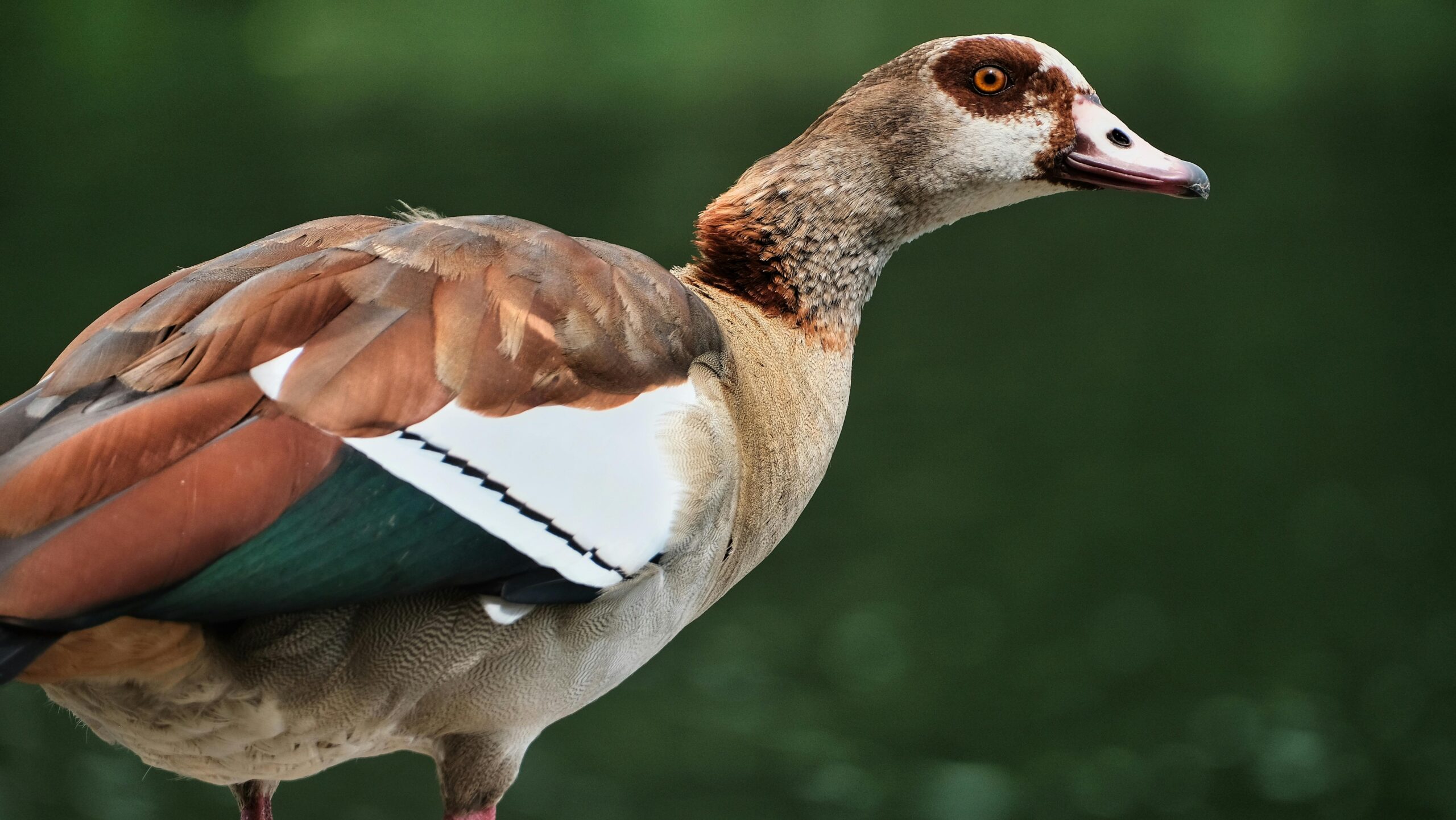
Overview
The Egyptian Goose (Alopochen aegyptiaca) is a striking African waterfowl species, technically a sheldgoose. Known for its bold markings, adaptability, and long history alongside humans.
It is native to Africa but is also found in many parts of Europe and North America due to introductions.
Distribution & Habitat
Native range: Sub‑Saharan Africa and the Nile Valley
Introduced populations: Europe, the Middle East, and U.S. states like Florida, Texas, and California
Habitats: Lakes, ponds, wetlands, open grasslands, and even urban parks
Behavioral flexibility: Will perch in trees and nest in unusual places like church steeples, caves, and abandoned raptor nests

Adult Male
Noticeably larger, bulkier body, thicker neck
Same dark eye patch; sometimes looks a bit sharper due to larger head
Sometimes appears broader due to body size
Stands more upright and looks more robust
Adult Female
Smaller, slimmer body and neck
Same patch; may look softer or slightly darker
Appears narrower or more compact

Size
Length: Typically 63–76 cm (about 25–30 inches)
Wingspan: Generally 134–160 cm (about 52–63 inches).
Weight: Usually 1.1–3 kg (about 2.4–6.6 lbs),
with most adults falling between 1.5–3 kg.
Diet/Foraging
Primarily herbivorous but opportunistic:
Special note: In South Africa, they shift to algae and pondweed during molting
Plants: Grass, leaves, grains, wheat
Other foods: Worms, insects (bees, wasps, locusts, ants), frogs
Breeding & Nesting
Nesting sites: Almost anywhere—trees, cliffs, buildings, burrows, other birds’ abandoned nests
Clutch size: Typically 5–12 eggs (inferred from general species accounts)
Parental behavior: Highly defensive; known to attack intruders including drones
Migration
Egyptian Geese are not true long‑distance migrants, making only short‑ to medium‑range movements when necessary. Their movements are driven by local conditions rather than seasons. They stay in place when food and water are abundant. In both their native African range and introduced areas like Europe and the southeastern United States, Egyptian Geese show nomadic, opportunistic movement patterns.
Behavior
Highly territorial and aggressive: Egyptian Geese defend nesting areas vigorously, using calls, wing‑flapping, and sometimes prolonged physical fights involving biting and striking with the knobs on their wings.
Strong fliers and versatile foragers: They spend much time on land, perch on trees and buildings, and forage by pecking or dabbling in shallow water, feeding mainly on plants but also small animals.
Seasonal social shifts: They nest solitarily but form large family-based flocks outside the breeding season, sometimes numbering in the hundreds or thousands in Africa
