Overview
The Mandarin duck (Aix galericulata) is a perching duck native to the East Palearctic, especially China, Japan, Korea, and eastern Russia. It is closely related to the North American wood duck and is the only other member of the genus Aix.
The Mandarin duck is one of the most visually striking birds on Earth, known for its ornate plumage, tree‑nesting habits, and deep cultural symbolism. Below is a complete, structured guide covering its appearance, behavior, habitat, diet, reproduction, evolution, and cultural meaning.
Distribution & Habitat
Crested Pigeons are found across most of mainland Australia, except for the densest rainforests and the farthest northern tropics. Their range has expanded significantly since European settlement due to the creation of farmland, water sources, and open grassy areas.
They thrive in:
- Open woodlands
- Grasslands and scrub
- Farmland and grazing areas
- Suburban parks, gardens, and sports fields
- Roadside edges and rural towns
They prefer open ground for feeding and scattered trees or shrubs for roosting and nesting.

Adult Male
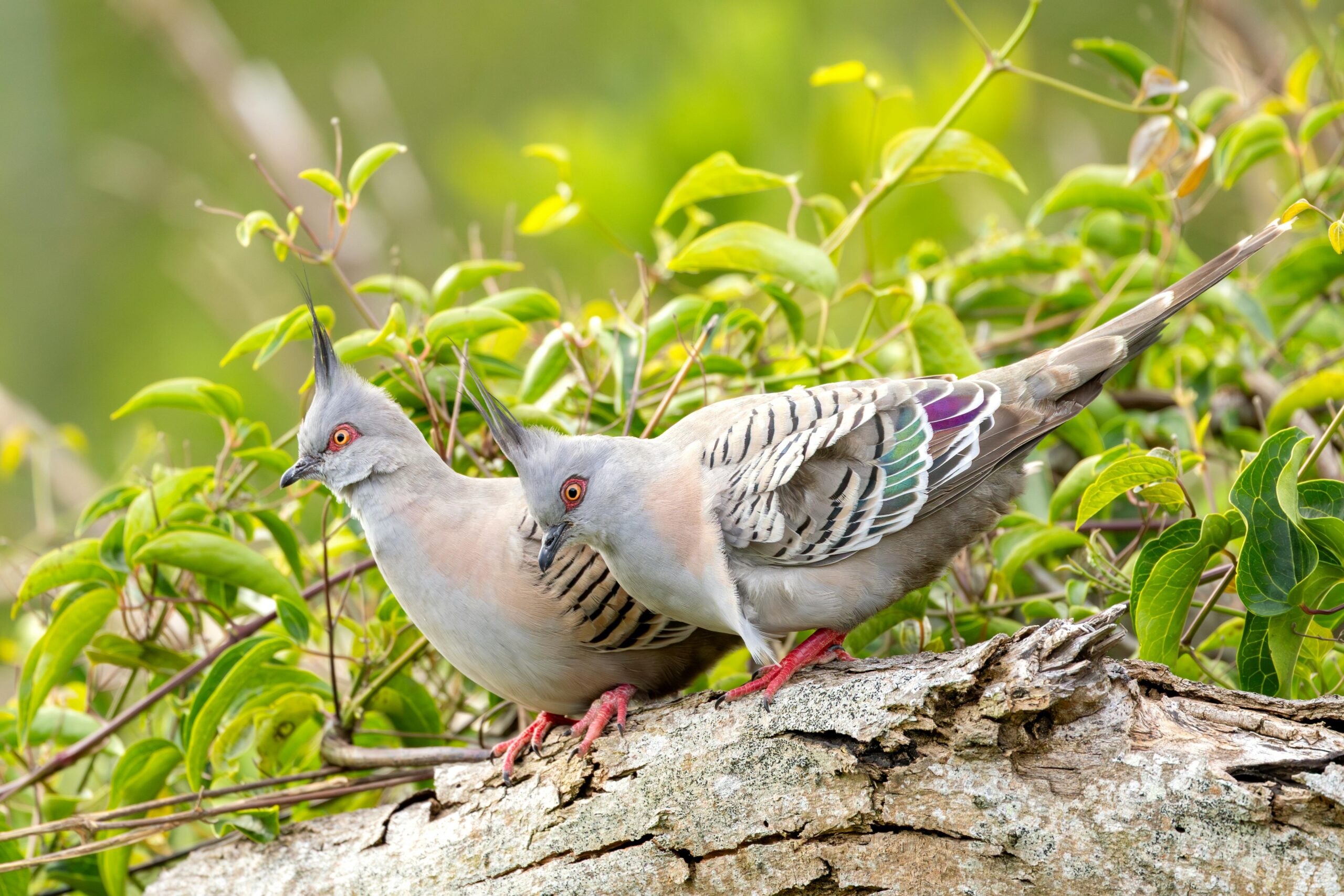
Tall, pointed crest that stands upright
Soft grey‑brown body with a slightly rosier chest than the female
Iridescent wing patches showing green, purple, and bronze tones
Black‑barred wings and a long, tapered tail with white edging
Red eye‑ring and pink legs
Slightly larger and heavier than the female, though the difference is subtle
Adult Female
Tall pointed crest, just like the male
Grey‑brown body with softer, slightly duller tones overall
Iridescent wing patches, though often a bit less vivid than the male’s
Black‑barred wings and a long, tapered tail with white edging
Red eye‑ring and pink legs
Slightly smaller and slimmer than the male, but the difference is subtle

Size
Length: 30–35 cm
Wingspan: 40–45 cm
Weight: 150–250 g, with males usually a little heavier
Diet/Foraging
Crested Pigeons are primarily seed‑eaters, especially grass seeds.
Their diet includes:
- Native and introduced grass seeds
- Seeds from weeds and crops
- Small insects (occasionally)
- Leaves or small plant matter when seeds are scarce
They forage almost entirely on the ground, walking steadily and pecking at food items.
Breeding & Nesting
Crested Pigeons build simple twig nests in shrubs or small trees, usually just a few meters above the ground. They lay two white eggs, and both parents share incubation for about 18–20 days. The chicks hatch helpless and are fed crop milk, growing quickly and fledging in 3–4 weeks. Because they can breed year‑round in good conditions, pairs often raise multiple broods each year.
Migration
Crested Pigeons are non‑migratory birds. They stay in Australia year‑round and do not make long seasonal movements. Instead, they make local shifts when needed—usually short distances to find water, fresh seed sources, or better shelter. In dry inland regions, they may move temporarily after rainfall when food becomes abundant, but overall they are considered sedentary, remaining within the same general area throughout their lives.
Behavior
Ground‑foraging lifestyle: They spend most of their time walking on open ground searching for seeds, often in small groups.
Whistling takeoff: When startled, they launch into flight with a loud wing‑whistle created by a special feather, which acts as an alarm signal to other pigeons.
Calm and social: They are gentle, tolerant birds that gather in loose flocks, perch together, and show relaxed behavior even in busy suburban areas.
