Overview
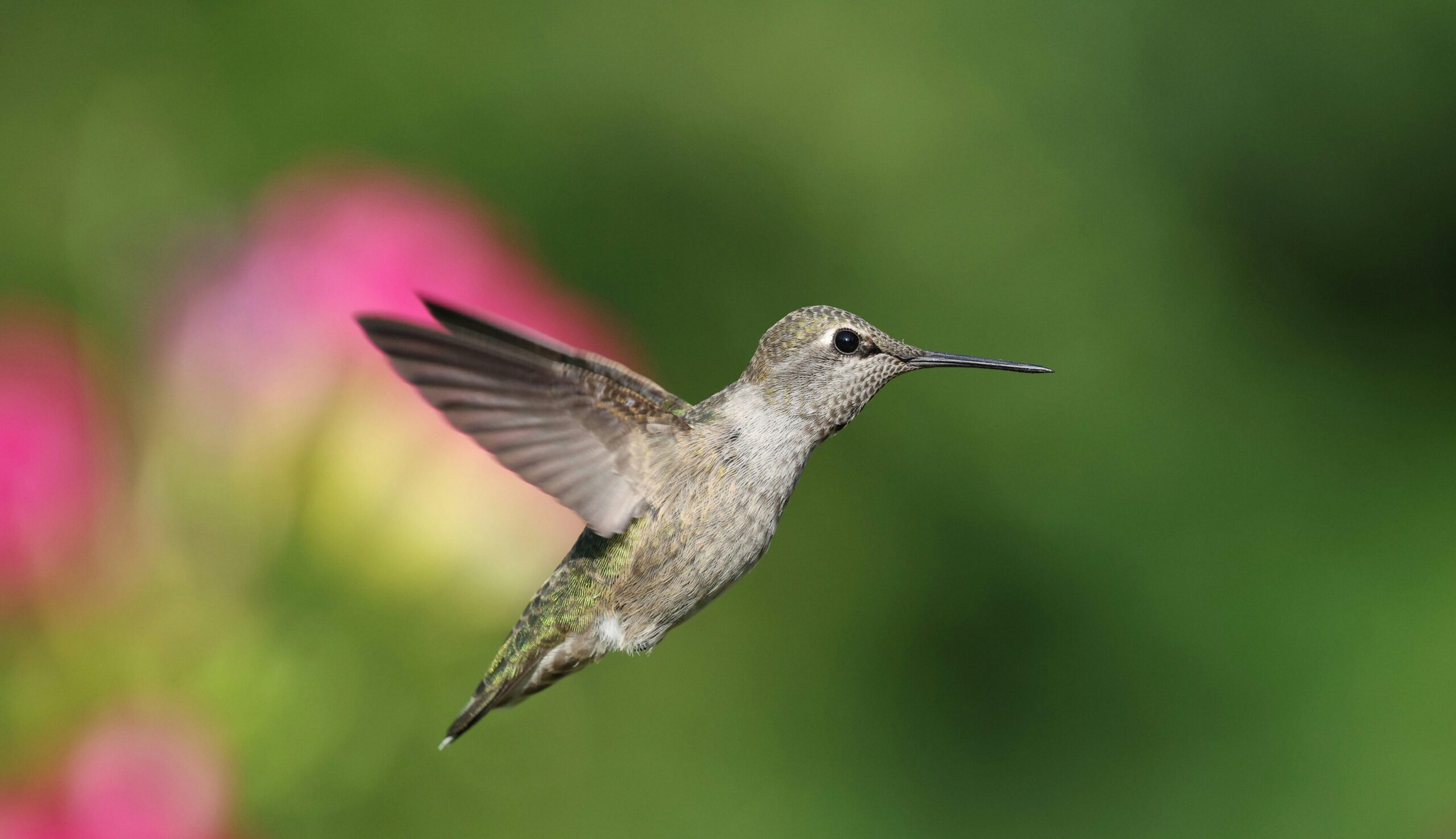
Anna’s Hummingbird is a small, iridescent hummingbird of the Pacific Coast, famous for the male’s rose‑pink throat and crown, bold personality, and dramatic courtship dives. It lives year‑round from Baja California to British Columbia, thriving in gardens, parks, and suburban areas. These hummingbirds feed on nectar and small insects, often defending feeders aggressively. Unlike most hummingbirds, they commonly overwinter in cold climates, surviving chilly nights by entering torpor to conserve energy. Females build tiny cup‑shaped nests and raise two chicks per brood, while the species overall remains widespread and increasing.
Distribution & Habitat
Historically limited to southern California and Baja California, but expanded north and east during the 20th century due to exotic flowering trees and feeders .
Now found year‑round along the Pacific Coast from Baja to British Columbia, and east into Arizona and the Desert Southwest .
Common in gardens, chaparral, open woodlands, city parks, and suburban areas

Adult Male
Bright rose‑pink throat and crown
Shimmering green back and sides
Gray chest and belly
Straight black bill
Small, compact body with a short tail
Adult Female
Green back and head with a soft iridescent sheen
Grayish-white chest and belly
Small red throat spots (sometimes none)
Straight black bill
More subdued colors than the male, overall a softer, lighter look

Size
Length: ~4 inches (10 cm)
Wingspan: ~4.7 inches (12 cm)
Weight: 0.1–0.2 oz (3–6 g)
Diet/Foraging
Primarily feeds on nectar from a wide variety of plants, especially currant and gooseberry species .
Also consumes small insects and spiders for protein .
Highly territorial at feeders and flower patches, often chasing away other hummingbirds and even large insects
Breeding & Nesting
Breeds unusually early—as early as mid‑December in coastal California, aligning with winter blooms. Females build nests and incubate two white eggs for 14–19 days
Migration
Anna’s Hummingbirds are mostly non‑migratory, staying year‑round along the Pacific Coast where mild winters and abundant flowers or feeders provide enough food to survive. While most individuals remain in the same area all year, some birds from northern regions or higher elevations make short seasonal movements to lower, warmer locations when temperatures drop and insects become scarce. In parts of the Southwest, they may also shift westward toward coastal areas after breeding to escape extreme heat. Overall, their movements are short, flexible, and highly dependent on local climate and food availability, rather than the long-distance migrations typical of many other hummingbirds.
Behavior
Highly territorial — they aggressively defend feeders, flowers, and perches.
Dramatic courtship dives — males dive from great heights and make a sharp tail‑feather sound.
Use torpor — they lower body temperature at night to survive cold conditions.
