Overview
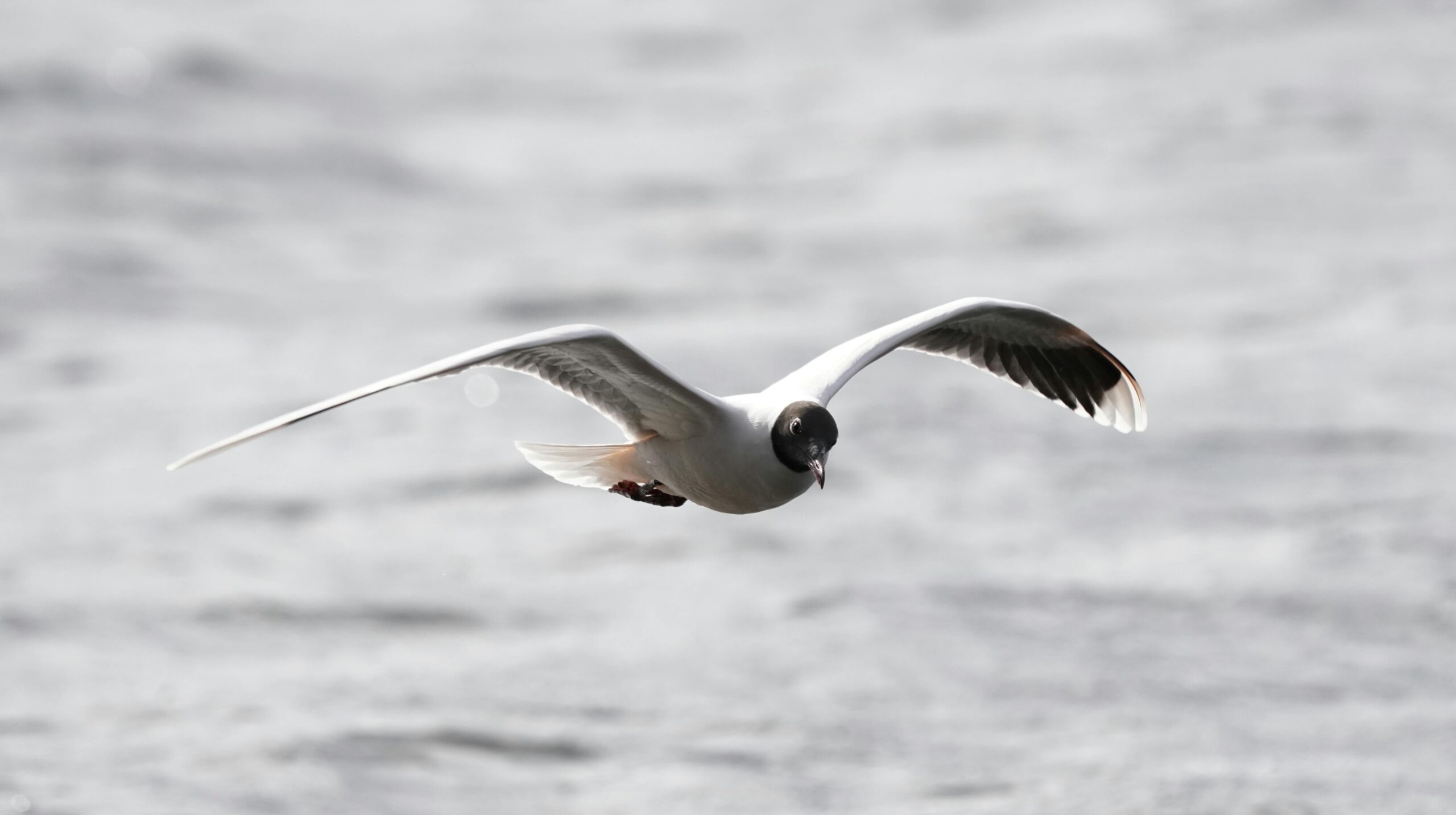
The Bonaparte’s Gull is a small, graceful gull of North America, easily recognized by its buoyant, tern‑like flight and delicate build. Breeding in the boreal forests of Alaska and Canada, it is one of the few gulls that nests in trees, often choosing spruce branches over water. In summer it sports a neat black hood, while in winter it shifts to a clean white head marked only by a dark ear spot. Unlike many gulls, it feeds heavily on insects—often catching them in midair—and avoids scavenging. During migration and winter it gathers along coasts, lakes, and rivers, forming lively flocks before returning north each spring.
Distribution & Habitat
Breeding range: Boreal forests of southern Alaska and interior western Canada, east to central Quebec. Prefers open coniferous forest edges near lakes, bogs, or ponds.
Winter range: Coasts of North America and the Great Lakes.
Migration: Moves toward the nearest coast in fall; adults migrate before juveniles.

Adult Male
Black hood in breeding season, smooth and neatly defined
White neck, breast, and underparts creating strong contrast with the hood
Pearl‑gray upperparts on the back and wings
Thin black bill giving a delicate, tern‑like look
Orange‑red legs and feet during breeding
White wing leading edge with black wingtips visible in flight
Adult Female
Same black hood in breeding season, though sometimes slightly less intensely colored
White underparts and neck, clean and bright
Pearl‑gray upperparts matching the male
Thin black bill, delicate and straight
Orange‑red legs and feet during breeding, though sometimes a bit duller than males
White wing leading edge with black wingtips

Size
Length: 11–15 inches in,
Wingspan: 30–33 inches,
Weight: 6–8 ounces
Diet/Foraging
Breeding season: Primarily insects, often caught on the wing.
Non‑breeding: Small fish, krill, and aquatic invertebrates.
Foraging style includes dipping to the water, picking while swimming, and aerial insect hunting.
Notably does not scavenge at garbage dumps, unlike many gulls.
Breeding & Nesting
One of the only gulls that regularly nests in trees, especially spruce. Nests are built 4–15 ft above ground on horizontal branches, made of twigs, moss, and vegetation.
Typical clutch: 3 eggs, olive to buff with brown blotches. Both parents incubate.
Migration
Bonaparte’s Gulls migrate between the boreal forests of Alaska and Canada and the coastal regions of North America, traveling south in late summer and fall and returning north in late April and early May. Their migration often follows major lakes and rivers, and they frequently stop at inland reservoirs to feed on insects. During winter they gather along both coasts and the Great Lakes, forming active flocks before heading back to their tree‑nesting breeding grounds in spring.
Behavior
Flight: Direct, buoyant, and agile—often mistaken for a tern.
Flocking: Forms large flocks in migration and winter; often mixed with other small gull species.
Vocalizations: Rasping tee‑ar and soft nasal calls.
