Overview
The Mandarin duck (Aix galericulata) is a perching duck native to the East Palearctic, especially China, Japan, Korea, and eastern Russia. It is closely related to the North American wood duck and is the only other member of the genus Aix.
The Mandarin duck is one of the most visually striking birds on Earth, known for its ornate plumage, tree‑nesting habits, and deep cultural symbolism. Below is a complete, structured guide covering its appearance, behavior, habitat, diet, reproduction, evolution, and cultural meaning.
Distribution & Habitat
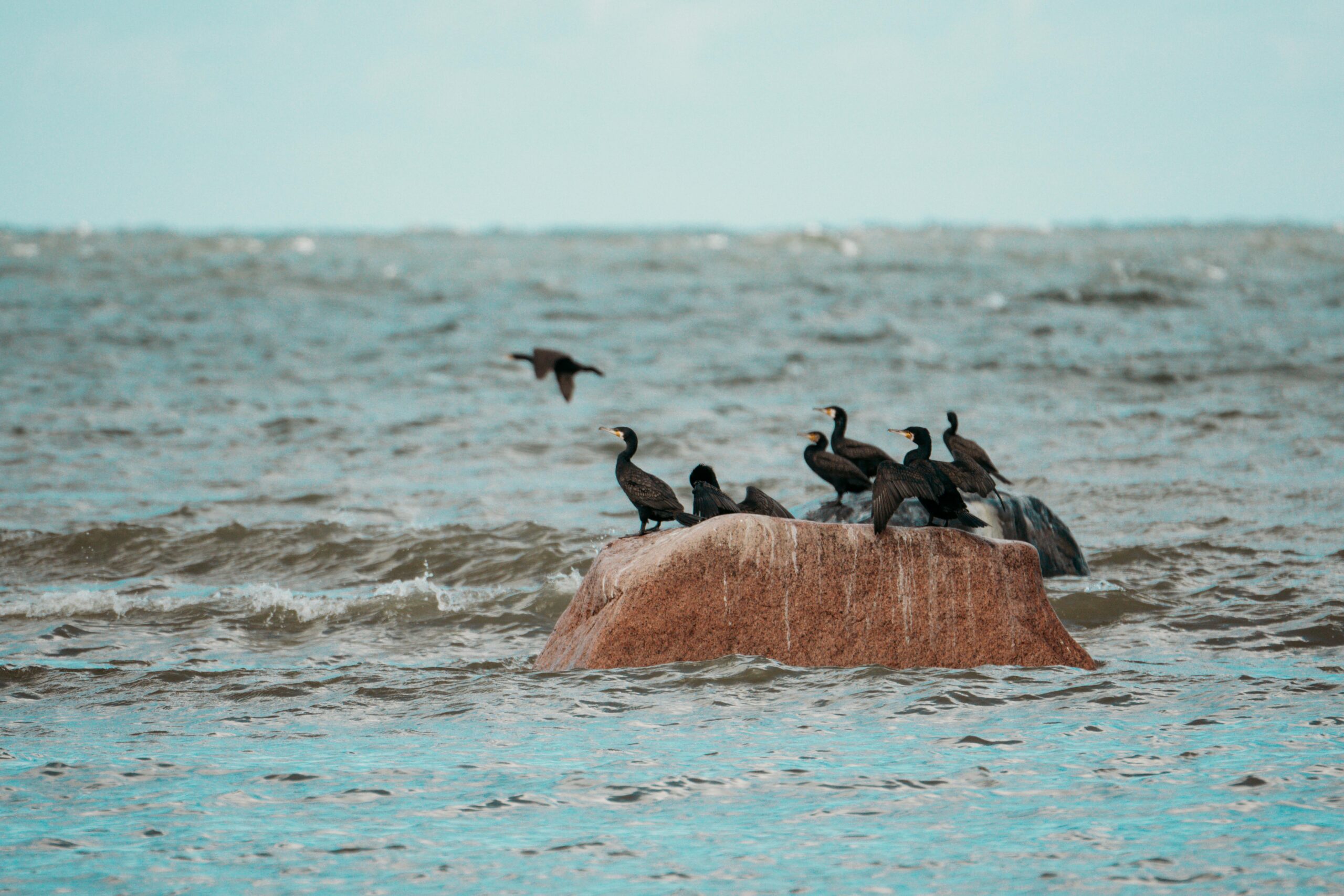
Cormorants live on every continent except Antarctica’s interior. They thrive in:
- Coastal shorelines
- Estuaries and bays
- Inland lakes and rivers
- Man‑made reservoirs and harbors
They prefer places with abundant fish and safe perches for drying and roosting.

Adult Male
Mostly dark plumage, often black with a greenish or bronze sheen
Long, slender neck and a hooked bill for gripping fish
Bright facial skin patches (yellow, orange, or blue depending on species), often more vivid in breeding season
Glossy feathers on the head and neck during breeding, sometimes with small crests or white plumes
Large, webbed feet and a long tail that help with diving
Sleek, streamlined body suited for underwater pursuit
Adult Female
Mostly dark plumage, similar to the male, though often slightly browner or duller
Long neck and hooked bill, with facial skin patches (yellow, orange, or blue depending on species) that are usually less vivid than the male’s
Sleek body and webbed feet, but with fewer or smaller decorative features—females typically lack the more pronounced crests or bright breeding plumes seen in some males
Slightly smaller build on average, though the difference is subtle and often hard to see in the field

Size
Length: 70–100 cm (28–40 in) from bill to tail
Wingspan: 110–160 cm (43–63 in), depending on species
Weight: 1.2–3.5 kg (2.6–7.7 lbs)
Diet/Foraging
Cormorants eat mostly:
Amphibians and small aquatic animals when fish are scarce
Fish (their primary food)
Crustaceans like crabs and shrimp
Breeding & Nesting
Cormorants breed in large colonies, usually on trees, cliffs, or isolated islands near water. They build bulky stick nests, often reusing and enlarging them each year. A typical clutch has 2–4 eggs, and both parents take turns incubating for about a month. Chicks hatch helpless and are fed regurgitated fish, growing quickly and fledging in 5–7 weeks, depending on the species.
Migration
Cormorant migration is generally short to medium distance, with most species moving only as far as they need to find open water and reliable food. Birds from colder northern regions leave frozen lakes and rivers in autumn and travel to ice‑free coasts, estuaries, and large rivers, while populations in milder or tropical climates often remain year‑round residents. Their movements usually follow coastlines and major waterways, allowing them to feed along the way, and many migrate in loose lines or V‑shaped formations. Overall, cormorant migration is flexible and driven mainly by water conditions and prey availability, rather than long, fixed routes.
Behavior
Expert divers: They chase fish underwater using powerful kicks from their webbed feet, relying on partially wettable feathers to reduce buoyancy.
Wing‑spreading posture: After diving, they often stand with wings held open to dry and regulate body temperature.
Highly social: They gather in large colonies for nesting, roosting, and often travel or feed in loose groups along coasts and waterways.
