Overview
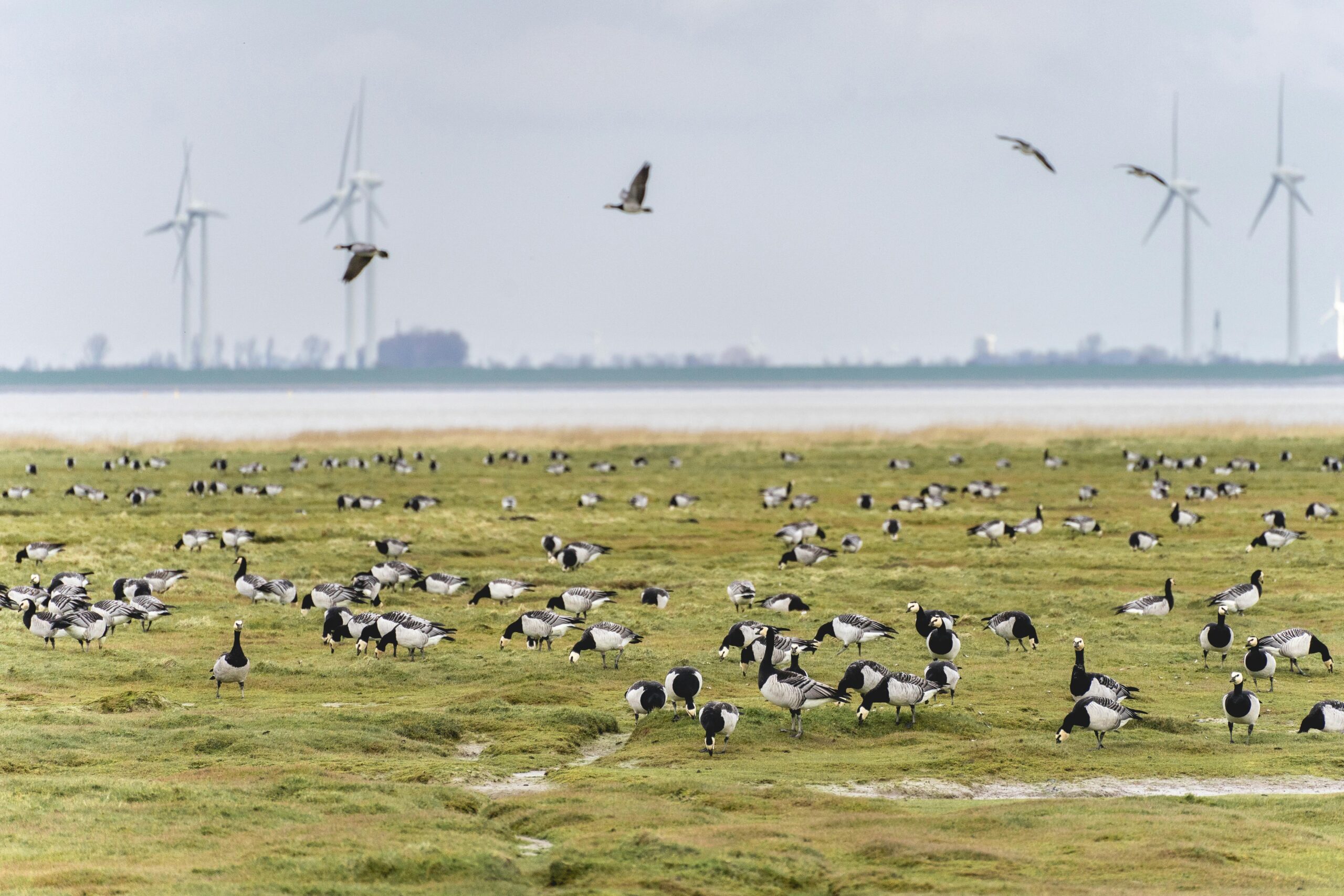
The barnacle goose (Branta leucopsis) is a small, striking Arctic-breeding goose known for its bold black‑and‑white plumage, dramatic nesting habits, and a long history of medieval myths about its origins. It breeds mainly in Greenland, Iceland, Svalbard, and parts of Russia, and winters in northern Europe.
Distribution & Habitat
Barnacle geese form several distinct breeding–wintering populations:
- Greenland → Scotland/Ireland: Grew from ~7,000 in the 1960s to 44,000 by 2011.
- Iceland (new population): Established since 1964; now 4,000+ breeding pairs (2024).
- Svalbard → Solway Firth (UK): Winters almost entirely on the England/Scotland border.
- Baltic Sea region: Smaller, more localized breeders.
- Rare but increasing visitor to eastern North America, usually mixed with Canada Geese.

Adult Male
Slightly larger body overall
Thicker neck
Blockier, broader head
Stance can look a bit more upright and robust
Adult Female
Slightly smaller and slimmer
Thinner neck
More delicate, rounded head shape
Overall impression is a bit more refined or streamlined

Size
Length: 55–70 cm (21.7–27.6 in)
Wingspan: 130–145 cm (51–57 in)
Weight: generally 1.6–3.4 kg (3.5–7.5 lb),
with males slightly heavier than females
Diet/Foraging
Barnacle geese are grass specialists. In short:
- They mainly eat grasses and sedges year‑round.
- In the Arctic summer they add herbs, mosses, willow leaves, and fresh shoots.
- Before migration they boost energy with seeds and berries.
- In winter they graze intensively on pastures and farmland grasses.
Their foraging style is fast, ground‑based grazing, usually in flocks.s.
Breeding & Nesting
Barnacle geese breed in the Arctic, where they form long‑term monogamous pairs and nest in tight colonies on cliffs or small offshore islands to avoid predators. The female builds a simple nest of vegetation lined with her own down and lays 3–5 eggs, which she incubates for about 24–28 days while the male stands guard nearby. Once the chicks hatch, they leave the nest almost immediately—and follow their parents to feeding areas, where they feed themselves but remain under close parental protection until they are strong enough for migration.
Migration
Barnacle geese make long, predictable migrations between their Arctic breeding grounds and their wintering areas in northern Europe. Each spring, they leave places like Scotland, Ireland, and the North Sea coasts in April–May, flying thousands of kilometers to reach breeding sites in Greenland, Svalbard, or Arctic Russia. After raising their young during the short Arctic summer, they head south again in September–October, returning to the same wintering fields and coastal meadows year after year. Different populations follow distinct routes, but all rely on strong winds, stopover sites, and precise navigation to complete these impressive journeys.
Behavior
Cliff‑nesting daredevils: Chicks hatch on high cliffs and jump down to reach the ground or sea, then follow parents on a 10–25 km trek to safer rearing areas. This reduces predation risk from Arctic foxes, polar bears, and skuas.
Diet: Primarily grasses and other plants; they feed intensively in pastures and meadows.
Social: Often found in large, noisy flocks in winter.
