Overview
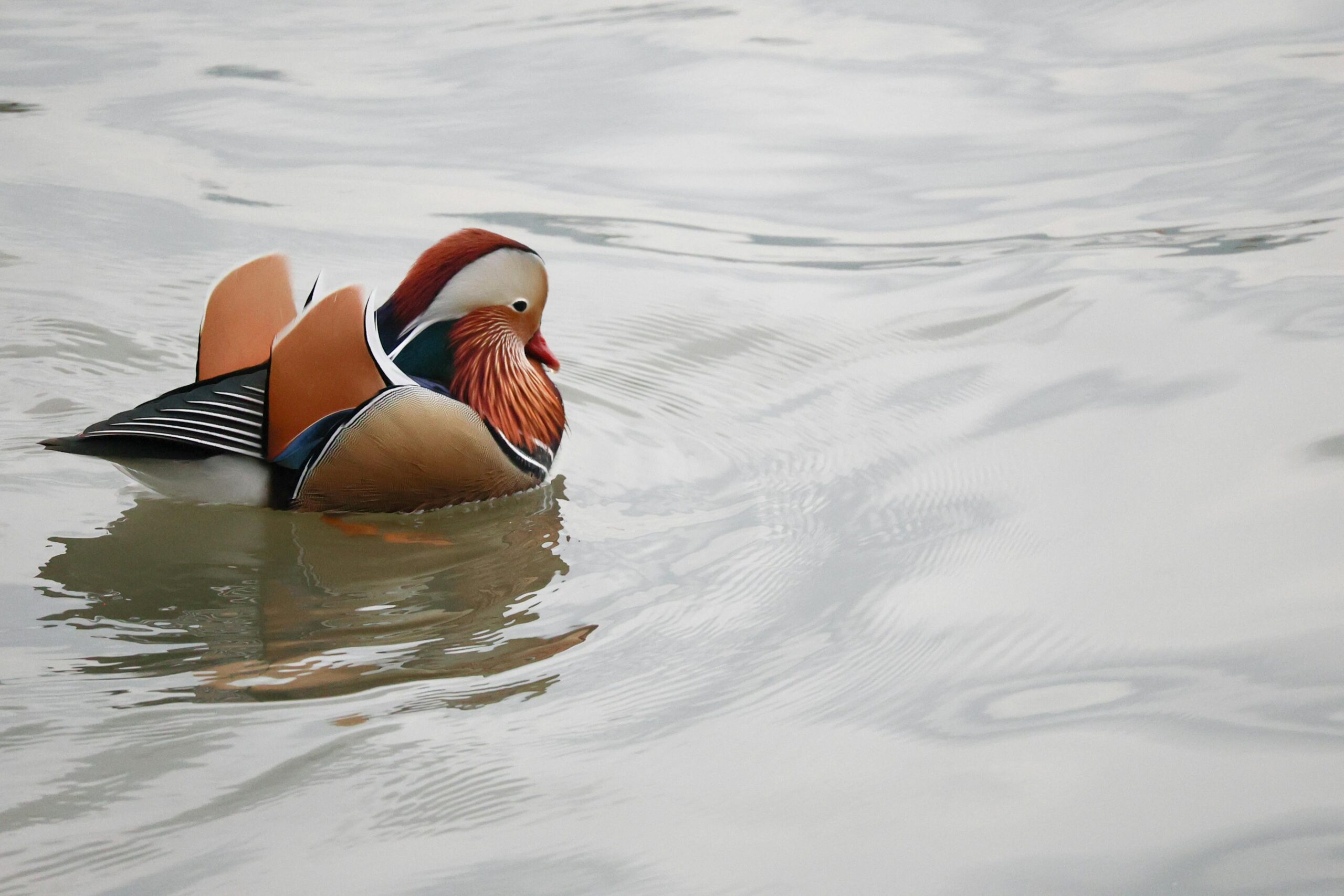
The Mandarin duck (Aix galericulata) is a perching duck native to the East Palearctic, especially China, Japan, Korea, and eastern Russia. It is closely related to the North American wood duck and is the only other member of the genus Aix.
The Mandarin duck is one of the most visually striking birds on Earth, known for its ornate plumage, tree‑nesting habits, and deep cultural symbolism. Below is a complete, structured guide covering its appearance, behavior, habitat, diet, reproduction, evolution, and cultural meaning.
Distribution & Habitat
Wooded lakes, ponds, and rivers.
Areas with mature trees for nesting; Quiet, forested wetlands.
Native range: China, Japan, Korea, eastern Russia Introduced populations: UK, Western Europe, and parts of North America (including the eastern U.S.).

Adult Male
A red bill, white crescent above the eyes
Purple breast, orange “sails” on the back
Green, bronze, and orange plumage patterns
Adult Female
Gray‑brown feathers
White eye‑ring with a stripe trailing behind
Pinkish bill

Size
Length: 58–72 cm (23–28 in),
Wingspan: 78–97 cm (31–38 in),
Weight: 0.9–2.1 kg (2–4.6 lb)
Diet/Foraging
Mandarin ducks are omnivores, eating:
- Aquatic plants, seeds, nuts, fruits
- Insects, snails, crustaceans; They forage by dabbling, surface feeding, and even picking food from branches.
In autumn, they especially love acorns.
Breeding & Nesting
They nest in tree cavities, sometimes 30+ feet high. Females lay up to 12 eggs in spring. Ducklings famously leap from the nest to the ground shortly after hatching—usually unharmed. They are monogamous and often cited as symbols of lifelong partnership.
Migration
Common Eiders are resident to medium‑distance migrants, depending on the subspecies and region. Some populations barely move at all, while others travel hundreds or thousands of kilometers between Arctic breeding grounds and more temperate wintering coasts.
Behavior
They are quiet ducks, producing whistles and soft calls rather than quacks.
Strong claws allow them to perch on branches, unusual for ducks.
Some populations migrate short distances in winter.
