Overview
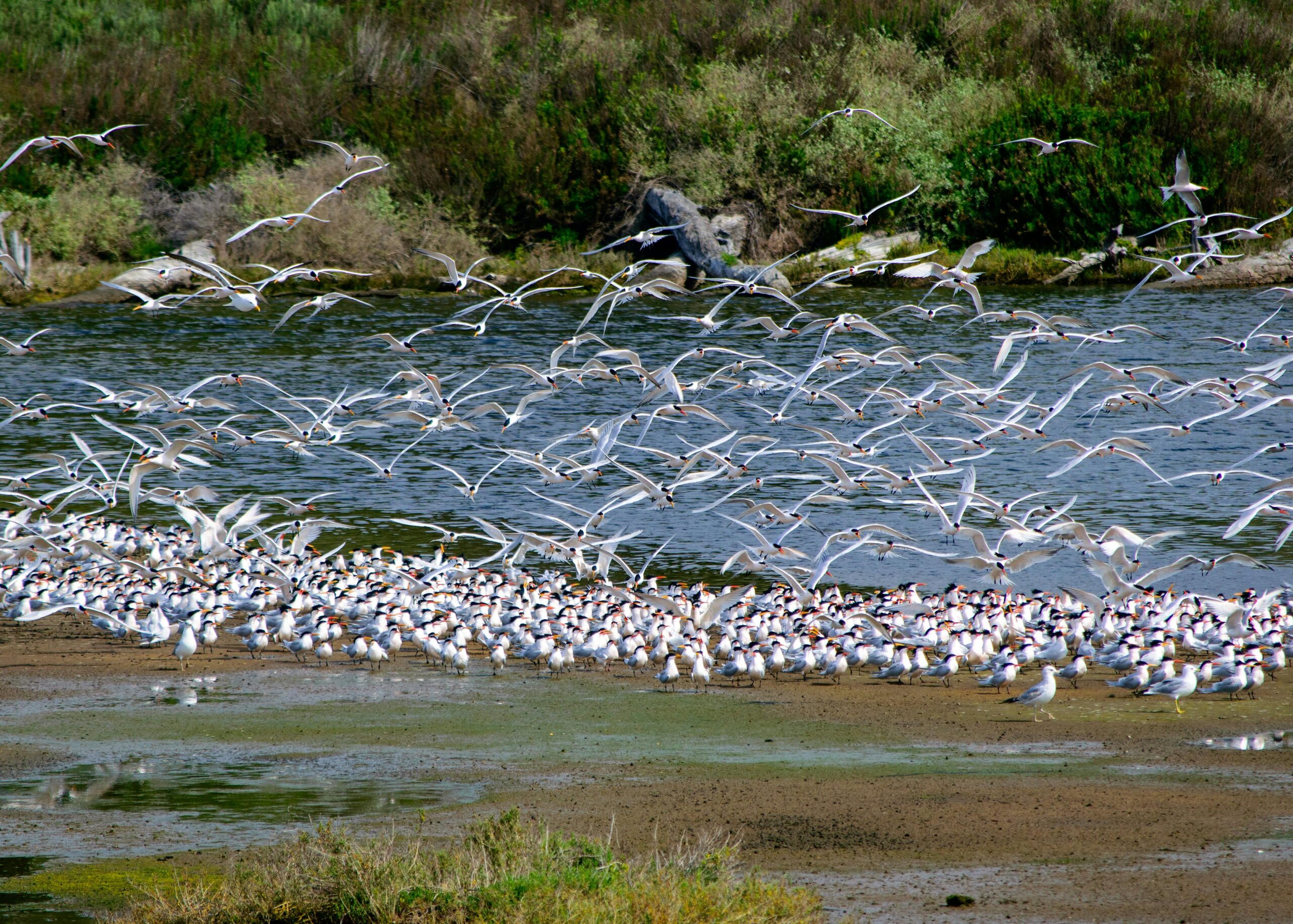
The Common Tern is a sleek, agile seabird known for its graceful flight, sharp calls, and long‑distance migrations. Slender and pale grey with a black cap, red bill, and deeply forked tail, it’s built for precision hunting over open water. Common Terns breed in colonies on sandy or gravelly shores, islands, and coastal wetlands, where they lay eggs in simple ground scrapes. They feed mainly on small fish, which they catch by hovering briefly before making a quick, direct plunge‑dive. Highly migratory, they travel impressive distances between northern breeding grounds and wintering areas in tropical and subtropical oceans. Their combination of elegance, speed, and adaptability makes them one of the most recognizable terns across much of the world.
Distribution & Habitat
The Common Tern has a broad circumpolar distribution, breeding across temperate and subarctic regions of Europe, Asia, and North America, where it forms colonies on open, sparsely vegetated sites such as sandbars, gravel islands, beaches, and coastal wetlands. These nesting areas are always close to shallow, fish‑rich waters, since the species depends on plunge‑diving for small fish throughout the breeding season. After nesting, Common Terns undertake long migrations to tropical and subtropical coastlines, wintering along warm marine bays, estuaries, lagoons, and offshore waters across the Americas, Africa, and southern Asia. Their year‑round distribution reflects a strong reliance on productive aquatic habitats and access to open water for feeding.

Adult Male
Clean black cap extending from forehead to nape during breeding season
Pale grey body with a slightly darker mantle and upperwings
White underparts that appear bright and clean in good light
Long, deeply forked tail with elongated outer tail feathers (“streamers”)
Red bill with a black tip in breeding season; darker and duller outside breeding
Red legs that stand out against pale plumage
Slim, elegant shape with long wings and buoyant, agile flight
Adult Female
Black cap like the male’s, though sometimes slightly less glossy
Pale grey upperparts and white underparts, matching the male overall
Red bill with a black tip, often a bit duller in color than the male’s
Red legs, similar in tone but sometimes less bright
Long, deeply forked tail, though tail streamers may be slightly shorter on average
Slim, elegant build with long wings and buoyant flight, indistinguishable from males at a distance

Size
Length: about 31–35 cm (12–14 in) from bill to tail
Wingspan: about 72–82 cm (28–32 in)
Weight: typically 110–140 g (4–5 oz)
Diet/Foraging
The Common Tern feeds mostly on small fish, which it catches by hovering over the water and making a quick plunge‑dive. It also eats crustaceans, insects, and small squid when fish are scarce. Terns usually forage near the surface, sometimes in small groups, and may follow predatory fish or join mixed feeding flocks when prey is abundant.
Breeding & Nesting
The Common Tern breeds in colonies on open, sparsely vegetated ground such as sandbars, gravel islands, beaches, and coastal wetlands. Nests are simple scrapes in the sand or gravel, sometimes lined with bits of vegetation or shells. Pairs typically lay 2–3 eggs, and both adults share incubation for about 3–4 weeks. After hatching, the chicks are semi‑precocial—mobile but still dependent—and hide among stones or vegetation while the parents bring them small fish. Young terns usually fledge at around 3–4 weeks, remaining with the adults as they learn to forage and prepare for migration.
Migration
The Common Tern is a long‑distance migrant, traveling between northern breeding grounds and tropical wintering areas. Birds from North America migrate to the Caribbean, Central America, and northern South America, while European and Asian populations move to Africa, the Middle East, southern Asia, and Australia. Migration happens mainly along coastlines, with terns following rich feeding areas and often gathering in large flocks. Their journeys can span thousands of miles, reflecting their strong dependence on warm, productive coastal waters outside the breeding season.
Behavior
Graceful plunge‑diving hunter: Hovers briefly over the water, then dives cleanly to catch small fish near the surface.
Highly social and vocal: Breeds in dense colonies and communicates constantly with sharp, distinctive calls.
Long‑distance migrant: Travels thousands of miles between northern breeding sites and tropical wintering coasts, often following shorelines and rich feeding areas.
