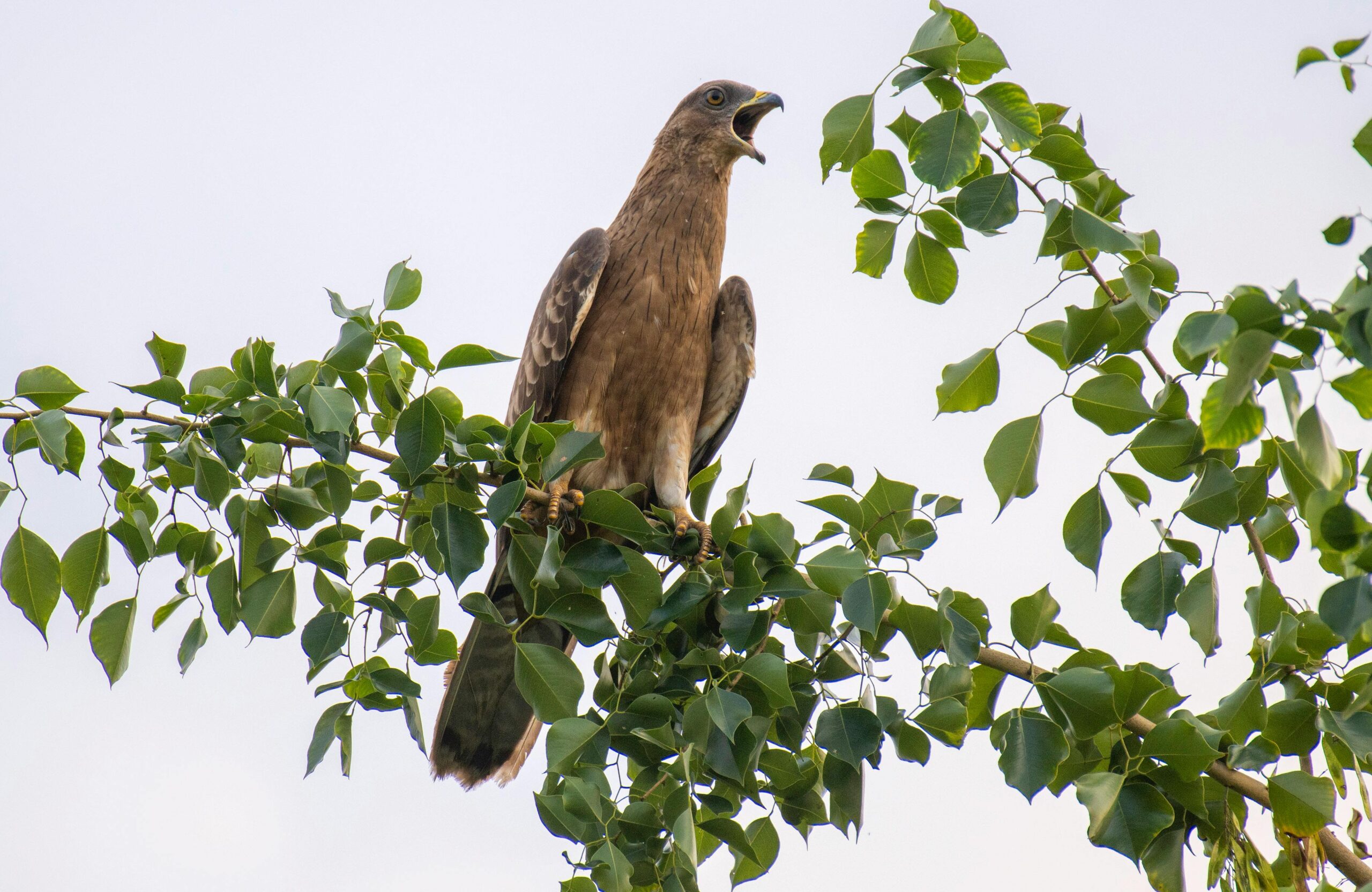
Overview
The Golden Eagle (Aquila chrysaetos) is one of the most widely distributed eagles in the world, occurring across North America, Europe, Asia, and parts of North Africa. It is among the best‑known birds of prey in the Northern Hemisphere, recognized for its combination of speed, agility, and powerful talons. Adults are dark brown with a distinctive golden‑brown nape, while juveniles show white patches on the wings and tail.
Golden Eagles are apex predators, hunting mainly hares, rabbits, marmots, and ground squirrels, though they can take larger prey when necessary. Their hunting relies on agility, speed, and strong feet, and they maintain large territories that may span up to 200 km².
Distribution & Habitat
Golden Eagles prefer mountainous regions, cliffs, open grasslands, and tundra, where they can soar and hunt efficiently. They build large nests—eyries—on cliffs or tall trees and often reuse them for years. They remain widespread across Eurasia, North America, and North Africa, though absent from heavily populated regions.

Adult Male
Dark brown body with rich, uniform coloration
Golden‑brown nape and crown, giving the species its name
Large, powerful bill that is dark at the tip and lighter at the base
Massive yellow feet with long, black talons
Broad wings with slightly lighter flight feathers
Long tail, usually dark with subtle banding
Adult Female
Dark brown plumage, essentially the same overall color as males
Golden‑brown nape and crown, though sometimes slightly less intense than in males
Large, powerful bill with a pale base and darker tip
Massive yellow feet with long, black talons
Broad wings with slightly lighter flight feathers
Long, dark tail with subtle banding

Size
Length: 66–102 cm (26–40 in)
Wingspan: 1.8–2.4 m (5.9–7.9 ft), among the largest of any eagle
Weight: 3.6–5 kg (7.9–11 lb), with females generally heavier than males
Diet/Foraging
Golden Eagles rely heavily on small to medium mammals, which make up the majority of their caloric intake. Studies show that mammals—especially lagomorphs (rabbits, hares) and sciurids (ground squirrels, marmots, prairie dogs)—often account for over 80% of their diet in many regions. They also take:
Larger mammals, including foxes, young deer, and even livestock on rare occasions
Birds, including grouse, pheasants, and waterfowl
Reptiles, such as snakes and lizards, and occasionally larger tortoises in certain habitats
Carrion, especially in winter when live prey is scarce; they will scavenge deer, livestock, and other carcasses and may steal kills from smaller predators (kleptoparasitism)
Breeding & Nesting
Golden Eagles are monogamous and often stay paired for life. They build huge stick nests on cliffs or tall trees and may reuse them for decades. A typical clutch is 1–3 eggs, incubated for about 42 days, mostly by the female. Chicks stay in the nest for 10–12 weeks before fledging, and the full breeding cycle lasts roughly four months.
Migration
Golden Eagles in the far north (Alaska, Canada, northern Eurasia) make long southward migrations in fall, following mountain ridges and thermal currents to reach wintering grounds with better prey availability. Eagles in more temperate regions are mostly resident, staying on territory year‑round. Young birds tend to wander widely before settling, while adults show strong site fidelity, returning to the same breeding and wintering areas each year.
Behavior
Powerful, strategic hunters that use soaring, surprise attacks, and high‑speed dives to take prey ranging from rabbits to foxes.
Highly territorial, defending enormous home ranges and often staying paired with the same mate for many years.
Masters of soaring flight, riding thermals and ridge winds for hours with minimal effort while scanning vast landscapes for prey.
