Overview
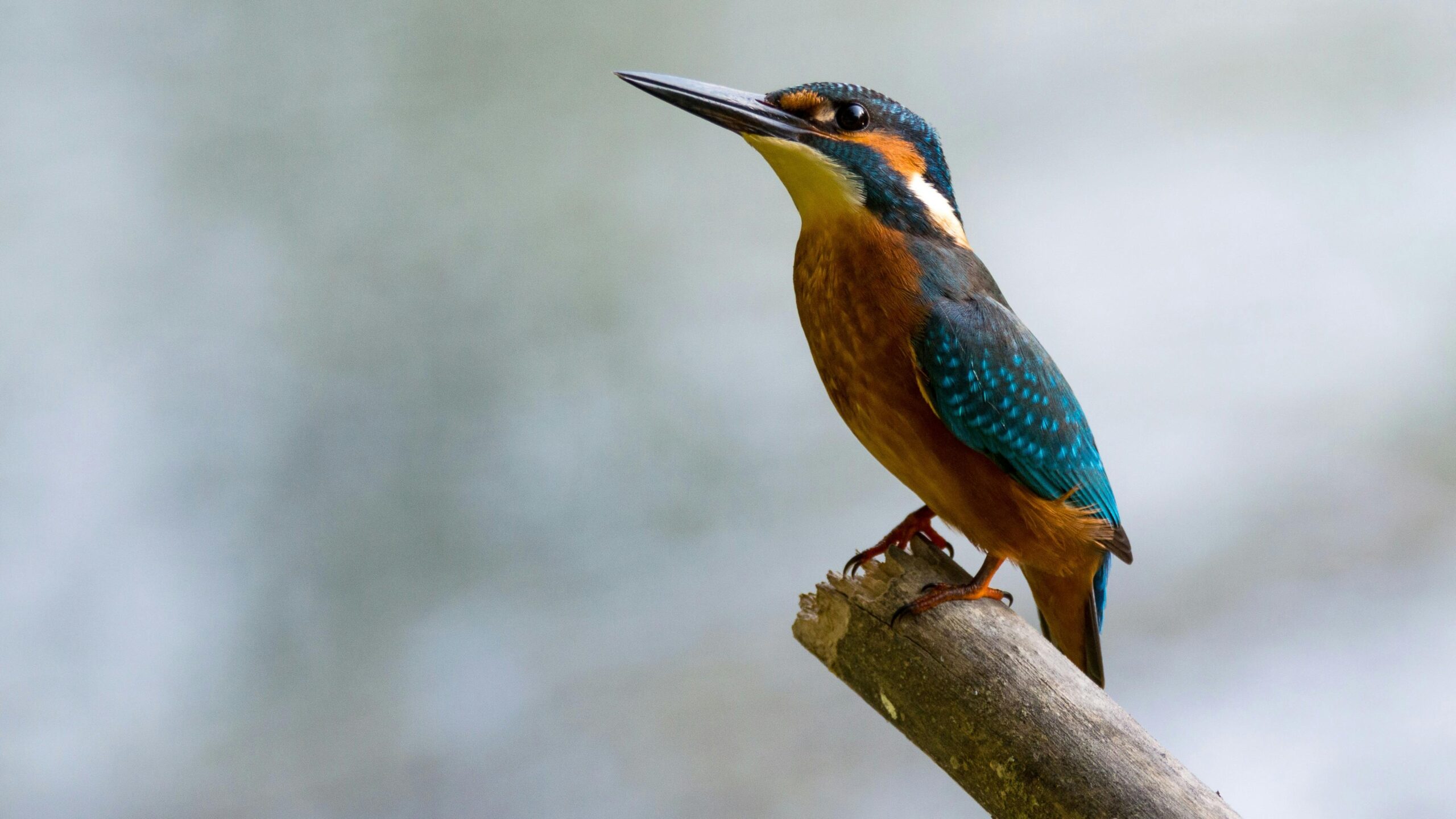
The Common Kingfisher is a small, brilliantly colored waterside bird found across Europe, Asia, and North Africa, instantly recognizable by its electric‑blue upperparts and rich orange underparts. It lives along clean, slow‑moving or still freshwater—rivers, streams, lakes, and ponds—where it hunts small fish by watching from a low perch and diving with remarkable precision. Highly territorial and mostly solitary, it defends productive stretches of water throughout the year. Breeding pairs excavate deep nesting burrows in steep riverbanks, raising their young on a constant supply of tiny fish. While many populations stay put year‑round, birds from colder regions move to milder areas when their waters freeze, reflecting the species’ strong dependence on open, clear water for survival.
Distribution & Habitat
The Common Kingfisher (Alcedo atthis) occupies a broad range across Europe, Asia, and North Africa, making it one of the most widespread small kingfishers. It is present throughout much of Europe and Asia as far east as Japan, and it also occurs in regions of North Africa and even parts of sub‑Saharan Africa. Most populations are resident, but birds from colder northern areas migrate south when inland waters freeze, shifting toward milder lowland or coastal regions.
Its habitat is tightly linked to clean freshwater systems, including lakes, ponds, streams, rivers, canals, wetlands, and brackish estuaries.

Adult Male
Bright metallic blue upperparts, including crown, wings, and back
Electric blue rump and tail, often flashing vividly in flight
Rich orange underparts from throat to belly
White throat patch and small white neck spot
Long black bill, entirely dark except for a slight bluish tone at the base
Short tail and compact body, giving a chunky, big‑headed look
Orange legs and feet, very bright and noticeable
Adult Female
Blue‑green upperparts similar to the male but often slightly duller
Orange underparts that may appear a bit paler than the male’s
White throat patch and small white neck spot, same as the male
Distinctive orange‑red lower mandible with a black tip (the key feature separating her from the male’s all‑black bill)
Bright orange legs and feet
Compact, big‑headed silhouette with a short tail and long bill

Size
Length: ~16–17 cm (6.3–6.7 in)
Wingspan: ~24–26 cm (9.4–10.2 in)
Weight: ~34–46 g (1.2–1.6 oz)
Diet/Foraging
The Common Kingfisher feeds mainly on small fish, which it catches by watching from a low perch and then making a quick plunge‑dive into the water. It also eats aquatic insects, tadpoles, and small crustaceans. After catching prey, it returns to a perch to beat it against the branch before swallowing it head‑first. Its foraging depends on clear water, since it hunts entirely by sight.
Breeding & Nesting
The Common Kingfisher has a very specialized breeding strategy centered around nesting burrows dug into riverbanks. Pairs excavate a tunnel 30–90 cm long in a vertical or steep earthen bank, ending in a small chamber where the female lays 5–7 glossy white eggs. Both birds dig the burrow, but the female handles most incubation, which lasts about 19–21 days. After hatching, both parents work nonstop to feed the chicks with small fish, sometimes delivering food every few minutes. The young fledge at around 23–27 days, but they remain nearby for a short period while learning to hunt before dispersing to find their own territories.
Migration
The Common Kingfisher is mostly a resident species, but its movements depend heavily on winter conditions. Birds living in mild climates usually stay on their territories year‑round, as long as their rivers and ponds remain unfrozen. In contrast, kingfishers from northern or colder regions migrate south or toward coastal areas when inland waters freeze, since they cannot hunt without open, clear water. These migrations are generally short‑distance and driven by the need to maintain access to fish rather than by long seasonal journeys.
Behavior
Perch‑and‑dive hunter: Watches from a low branch over clear water, then performs a fast plunge‑dive to catch small fish.
Highly territorial: Defends feeding stretches of river aggressively, especially during breeding season.
Solitary and secretive: Spends most of its time alone, staying close to dense waterside vegetation and flying fast and low over the water.
