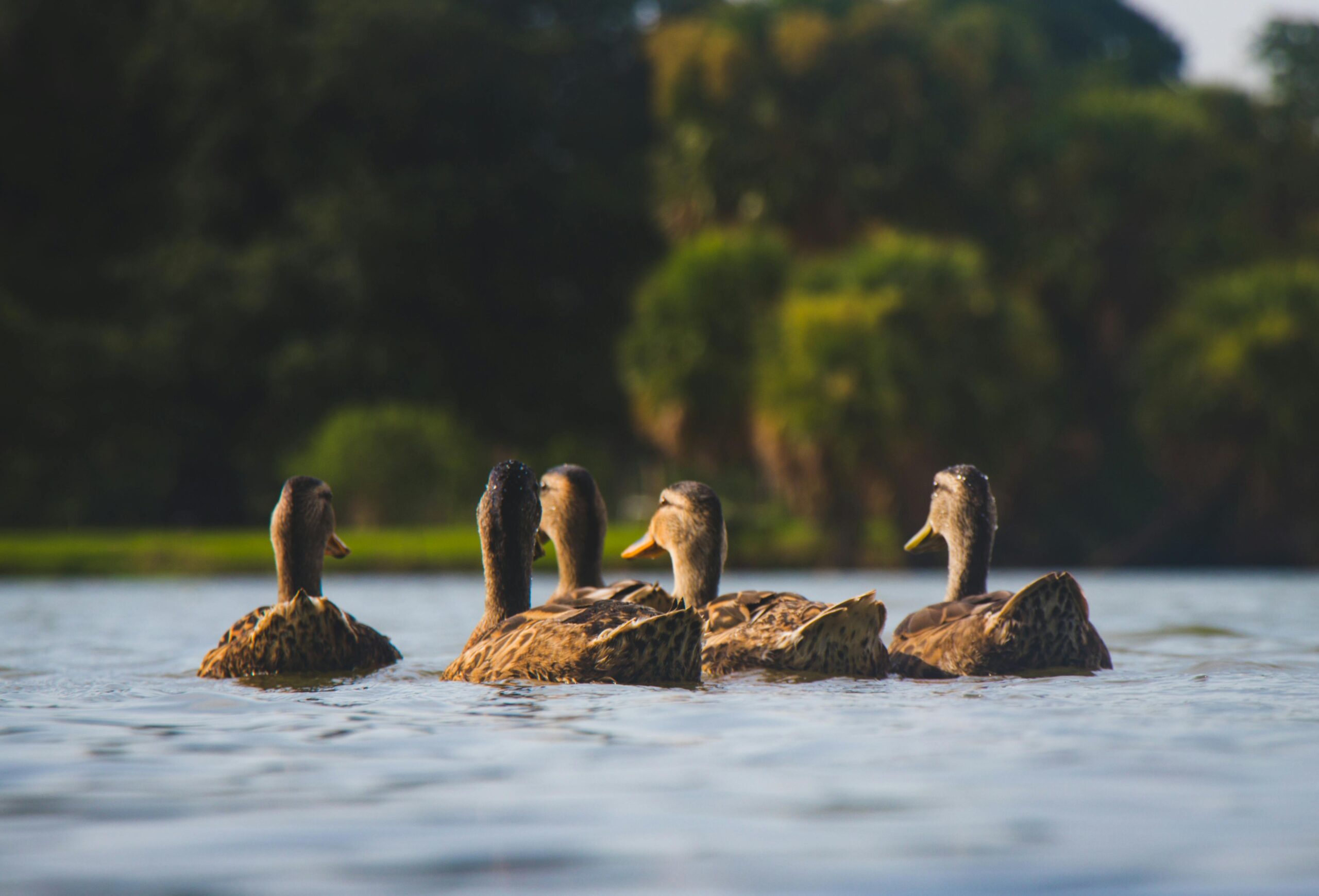
Waterfowl are broadly defined as birds that spend much of their lives in or around water, especially species adapted for swimming and foraging in aquatic environments. In the United States, the term typically includes ducks, geese, and swans, all of which belong primarily to the family Anatidae within the order Anseriformes. These birds rely on water for feeding, nesting, and protection, and many species migrate seasonally between wetland habitats.
A defining characteristic of waterfowl is their physical adaptation to aquatic life. Most species have webbed feet, which act like paddles to propel them efficiently through water. Their feathers are kept waterproof by oils produced from the uropygial (preen) gland, allowing them to stay buoyant and insulated even in cold environments. Waterfowl also possess specialized bills—often broad and flattened—equipped with structures called lamellae that help them filter food such as plants, small invertebrates, or fish from the water.
Seabirds share several specialized traits that allow them to thrive in saltwater environments:
- Salt glands above the eyes remove excess salt, enabling them to drink seawater.
- Waterproof plumage, maintained with oil from the uropygial gland, keeps them buoyant and insulated.
- Webbed feet aid in swimming and diving.
- Specialized bills reflect their feeding strategies—hooked bills for squid, serrated bills for gripping fish, or sharp bills for plunge-diving.
These adaptations reflect convergent evolution, where unrelated species develop similar traits to survive in similar environments.
Why they are Important:
- Maintain marine food webs by controlling fish, squid, and plankton populations
- Transport nutrients (via guano) that fertilize islands, reefs, and coastal ecosystems
- Indicate ocean health, signaling changes in climate, pollution, or overfishing
- Support biodiversity by enriching habitats used by plants, insects, and other animals
- Connect ecosystems by moving energy between ocean and land
- Hold cultural and economic value for coastal and Indigenous communities