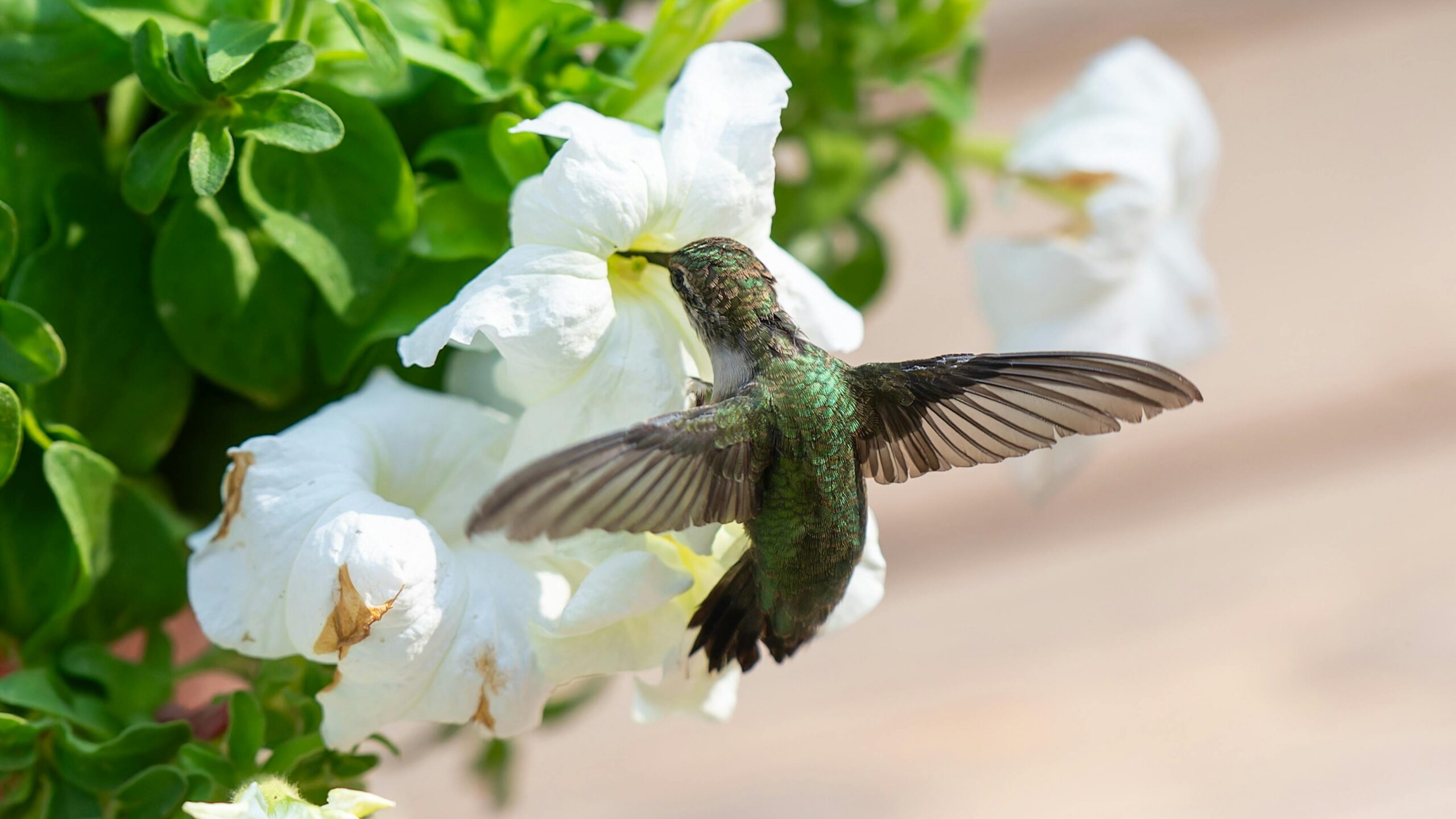
Hummingbirds belong to the family Trochilidae and include approximately 375 species distributed from Alaska to Tierra del Fuego, with the greatest diversity in Central and South America. They are the smallest mature birds, ranging from the 5 cm bee hummingbird to the 23 cm giant hummingbird. Their name comes from the humming sound produced by rapid wingbeats, which can reach 12–99 beats per second depending on the species.
Hummingbirds (family Trochilidae) include over 330 species, all found exclusively in the Americas. They are famous for their ability to hover, fly backward, and beat their wings at incredibly high speeds. Their long, slender bills and specialized tongues allow them to drink nectar, which fuels their extremely high metabolism. They also eat small insects for protein.
- Rapid metabolism requiring constant energy intakeny species—such as eagles, vultures, and condors—also scavenge carrion.
- Hovering and backward flight
- Nectar-feeding with specialized bills
- Very small size (some species only 2–3 grams)
Hummingbirds are known for their agility and speed. Some species can fly over 30 mph, and males of certain species dive at over 60 mph during courtship. They may visit 1,500–2,000 flowers per day to meet their energy needs. Their rapid wingbeats and high oxygen demand require them to breathe up to 250 times per minute during flight.
While many hummingbirds are non‑migratory, species like the rufous hummingbird undertake long migrations, traveling up to 3,900 miles between Alaska and Mexico.
Hummingbirds have evolved remarkable traits that allow them to maneuver with precision:
- Hovering flight enabled by a figure‑eight wing motion
- Long, specialized bills and tongues for extracting nectar
- Extremely high metabolic rate, the highest of any warm‑blooded animal
- Ability to enter torpor, a temporary energy‑saving state when food is scarce or at night
Why they are Important:
- Pollinate flowers that many other animals can’t reach
- Support plant reproduction, helping forests and ecosystems thrive
- Control insects by eating small bugs for protein
- Maintain biodiversity by sustaining plant and animal communities
- Signal environmental health, since they’re sensitive to habitat changes