Overview
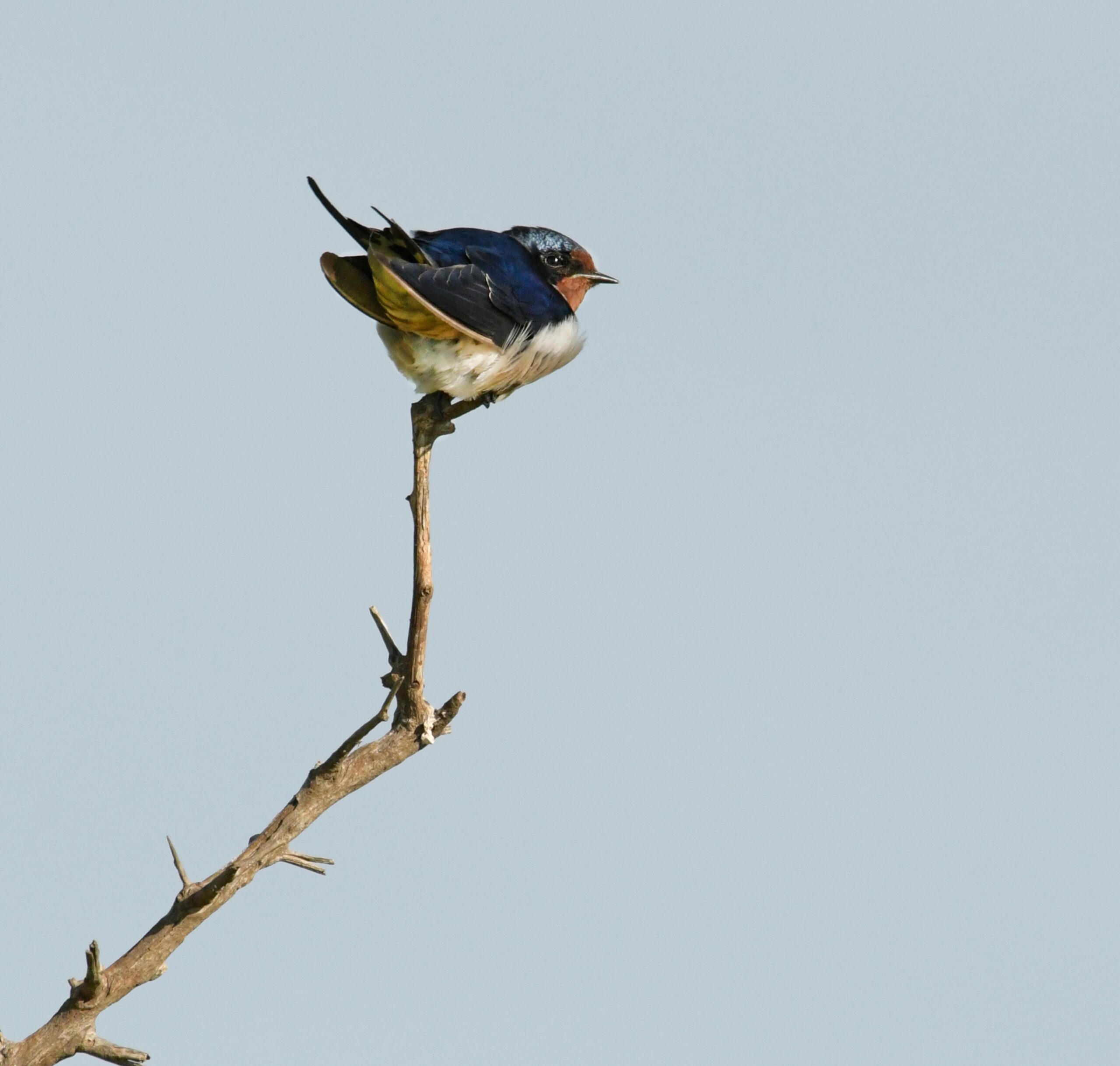
A Barn Swallow (Hirundo rustica) is a slender, fast‑flying swallow recognized by its glossy blue upperparts, cinnamon‑orange throat, and long, deeply forked tail, commonly seen swooping low over fields and water as it hunts insects.
The Barn Swallow is one of the most widespread and familiar swallow species in the world, occurring across North America, Europe, Asia, and wintering throughout much of the Southern Hemisphere. It is strongly associated with open country, especially farms, meadows, and wetlands, where it can forage for flying insects. Its graceful, agile flight and distinctive tail streamers make it easy to identify.
Distribution & Habitat
Barn Swallows breed across most of the Northern Hemisphere, including North America, northern Europe, and Asia, and migrate to South America, Africa, and southern Asia for winter. They prefer open habitats—fields, farms, lakeshores—and often nest near humans.

Adult Male
Long, deeply forked tail streamers (much longer than the female’s)
Brighter, glossier blue upperparts
Richer, deeper rufous throat and forehead
Stronger color contrast between blue back and pale underside
More sleek and vibrant overall appearance
Adult Female
Shorter tail streamers with a less dramatic fork
Duller blue upperparts with less sheen
Paler rufous throat and forehead
Softer, less contrasting colors
Slightly rounder, less streamlined look

Size
Length: 6.5–7.5 inches (17–19 cm)
Wingspan: 12.5–15 inches (32–38 cm)
Weight:
Diet/Foraging
Barn Swallow diet in short:
- Almost entirely flying insects
- Catches prey in midair while swooping low over fields and water
- Eats flies, beetles, wasps, moths, and other small insects
Breeding & Nesting
True to their name, Barn Swallows build cup‑shaped mud nests almost exclusively on human-made structures such as barns, sheds, bridges, and porches. Historically they nested in caves, but this is now rare. Both parents incubate the eggs, and older offspring may help feed younger siblings.
Migration
Barn Swallows are long‑distance migrants that spend the warmer months breeding across the Northern Hemisphere and then travel thousands of miles south once insect numbers drop. North American birds move from the United States and Canada to wintering grounds in Central and South America, while European and Asian populations head to Africa or southern Asia. Their migration follows a predictable seasonal rhythm: they depart in late summer and early fall, then return in spring as temperatures rise and flying insects become abundant again.
Behavior
Low, swooping flight: Often skim just above fields or water.
Social: Frequently forage in flocks, especially during migration.
Vocal: Produce constant twittering and chattering calls.
