Overview
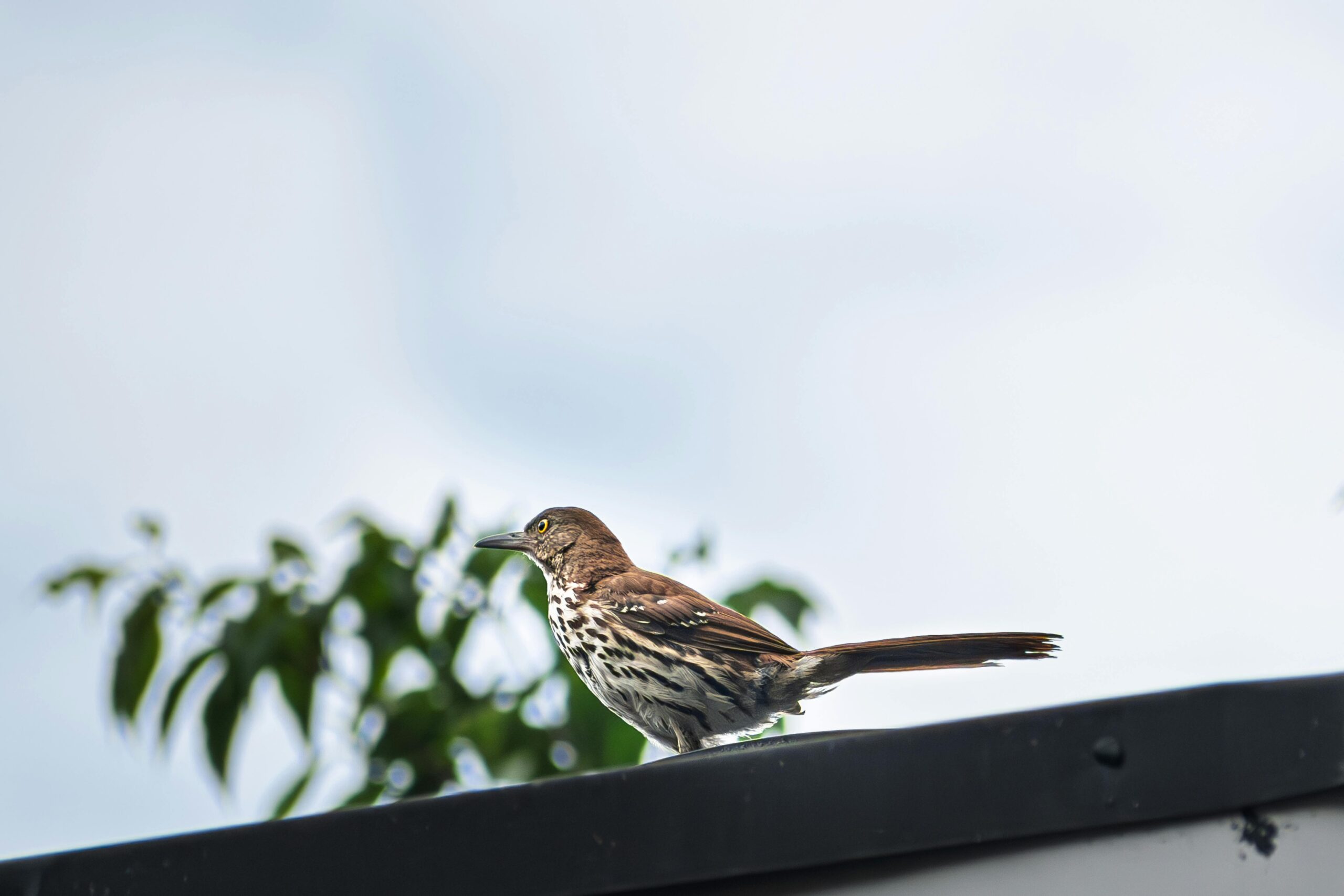
The Brown Thrasher is a large, reddish‑brown songbird with bright yellow eyes, bold streaking on the chest, and a long, curved bill. It lives in dense shrubs and thickets across the eastern U.S., where it forages on the ground for insects and fruit. Known for being shy but fiercely territorial, it also has one of the biggest song repertoires of any North American bird, often exceeding a thousand varied phrases.
Distribution & Habitat
The Brown Thrasher is found across the eastern and central United States and into southern Canada, making it the only widespread thrasher east of the Rockies. It breeds throughout this broad region, with northern birds migrating to the southeastern U.S. for winter while southern populations remain year‑round. Its preferred habitat is dense, shrubby cover—including thickets, hedgerows, woodland edges, overgrown fields, and brushy suburban areas—where it can forage on the ground while staying close to protective vegetation.

Adult Male
Rich reddish‑brown upperparts on the head, back, and tail
Heavily streaked, buff‑white underparts with dark brown streaks
Bright yellow eyes giving a sharp, alert look
Long, slightly curved brownish bill
Long rufous tail often held cocked or flicked
Two bold white wingbars
Adult Female
Reddish‑brown upperparts on the head, back, and tail
Buff‑white underparts with heavy brown streaking
Bright yellow eyes, same as the male
Long, slightly curved bill, usually the same color and shape as the male’s
Two clean white wingbars on brown wings
Long rufous tail, often flicked or held slightly raised

Size
Length: about 9–12 inches
Wingspan: about 11–13 inches
Weight: about 2–3 ounces
Diet/Foraging
BaThe Brown Thrasher eats a wide mix of insects, other invertebrates, fruits, nuts, and seeds, shifting its diet with the seasons—more insects in spring and summer, more berries and seeds in fall and winter. It forages mostly on the ground in dense shrubs and thickets, using its long, curved bill to sweep aside leaf litter in quick, forceful strokes to uncover prey. This species stays close to cover while feeding, often rustling loudly as it digs through debris, and will also hop into low branches to pluck berries when available.
Breeding & Nesting
The Brown Thrasher breeds in dense shrubs, thickets, and low trees, building a bulky cup‑shaped nest usually a few feet off the ground. They lay 3–5 speckled eggs, and both parents share incubation for about 11–14 days. The young leave the nest in 9–13 days, and adults are famously aggressive defenders of their nesting territory.
Migration
The Brown Thrasher is a partial migrant, with movement depending on where it lives. Birds in the northern U.S. and southern Canada migrate south each fall, wintering mainly in the southeastern United States. Populations in the Mid‑Atlantic, Southeast, and Deep South are mostly year‑round residents and don’t migrate at all. Migration is generally short‑distance, and thrashers move early in spring, often returning to breeding territories by March or April.
Behavior
Secretive but bold: Usually stays hidden in dense shrubs, yet becomes fiercely territorial during breeding season and will aggressively defend its nest.
Exceptional singer: Has one of the largest song repertoires of any North American bird, often exceeding a thousand varied phrases delivered in paired repeats.
Ground‑foraging specialist: Searches for food by sweeping leaf litter with strong sideways motions of its long bill, staying close to cover while feeding.
